Cooking Up Fractions: Delicious Lessons in the Kitchen!
Discover how the kitchen can be a fantastic learning lab for fractions! Explore practical ways to teach and learn fractions through everyday cooking and baking.

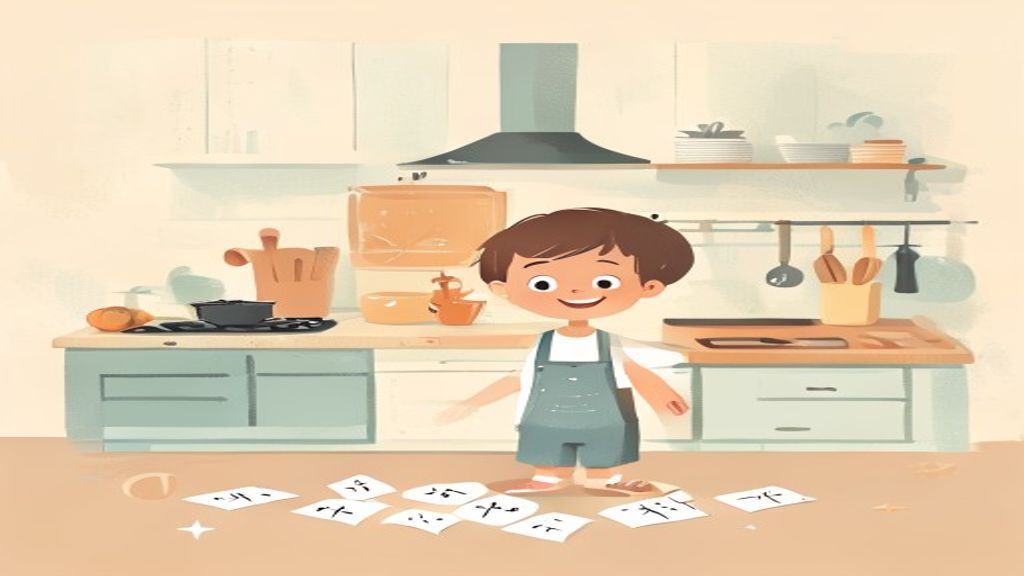
Cooking Up Fractions: Delicious Lessons in the Kitchen!
Have you ever thought about how much math is hiding in your kitchen? When it's time to bake cookies or whip up a family dinner, you're actually engaging in some fantastic real-world math practice, especially with fractions!
Why the Kitchen is a Math Whiz's Best Friend
The kitchen offers a hands-on, tangible way to explore fractions that can be much more engaging than abstract problems on paper. Measuring ingredients, adjusting recipes, and sharing food all involve understanding parts of a whole.
- Visual Learning: Seeing 1/2 cup of flour next to 1/4 cup of sugar helps children visualize different fraction sizes.
- Practical Application: Understanding fractions is essential for following recipes accurately.
- Sensory Experience: Tasting and experiencing the results of their math makes learning memorable.
Fractions in Action: Recipes Explained
Let's look at some common ways fractions pop up when you're cooking:
- Measuring Cups and Spoons: These are the most obvious tools! A recipe calling for 1/2 cup, 1/3 cup, or 1/4 teaspoon directly uses fractional measurements.
- Cutting and Dividing: When you cut a pizza into 8 slices, each slice is 1/8 of the whole. Similarly, dividing a cake or a brownie pan uses fractions.
- Scaling Recipes: Sometimes you need to double a recipe (multiplying fractions) or halve it (dividing fractions). This is a great way to practice fraction operations.
- Understanding Ratios: Recipes often imply ratios, like using 2 parts flour to 1 part sugar. This is a fundamental concept related to fractions.
Tips for Making Math Fun in the Kitchen
- Involve Kids in Measuring: Let them scoop and pour the ingredients. Ask questions like, "How many 1/4 cups make a whole cup?"
- Talk About Halving and Doubling: If a recipe serves 4 but you only need to serve 2, discuss how to halve all the ingredients.
- Use Visual Aids: Draw simple fraction charts to compare different measurements (e.g., showing that 2/4 is the same as 1/2).
- Focus on the Process: Celebrate the effort and learning, not just the perfect outcome. Mistakes are opportunities to learn!
Beyond the Cookbook
Using the kitchen as a math classroom can demystify fractions and build confidence. It shows students that math isn't just confined to textbooks; it's a vital part of everyday life. So next time you're in the kitchen, embrace the opportunity to cook up some fun with fractions!
Hello! I'm Rashi Agrawal, a Certified Mathematics Tutor with over 5 years of experience. Teaching 3rd to 10th grade dedicated to empowering international students. I've had the pleasure of guiding learners from diverse backgrounds, including students from the USA, UK, Australia, Canada, Singapore, V
View full profile →